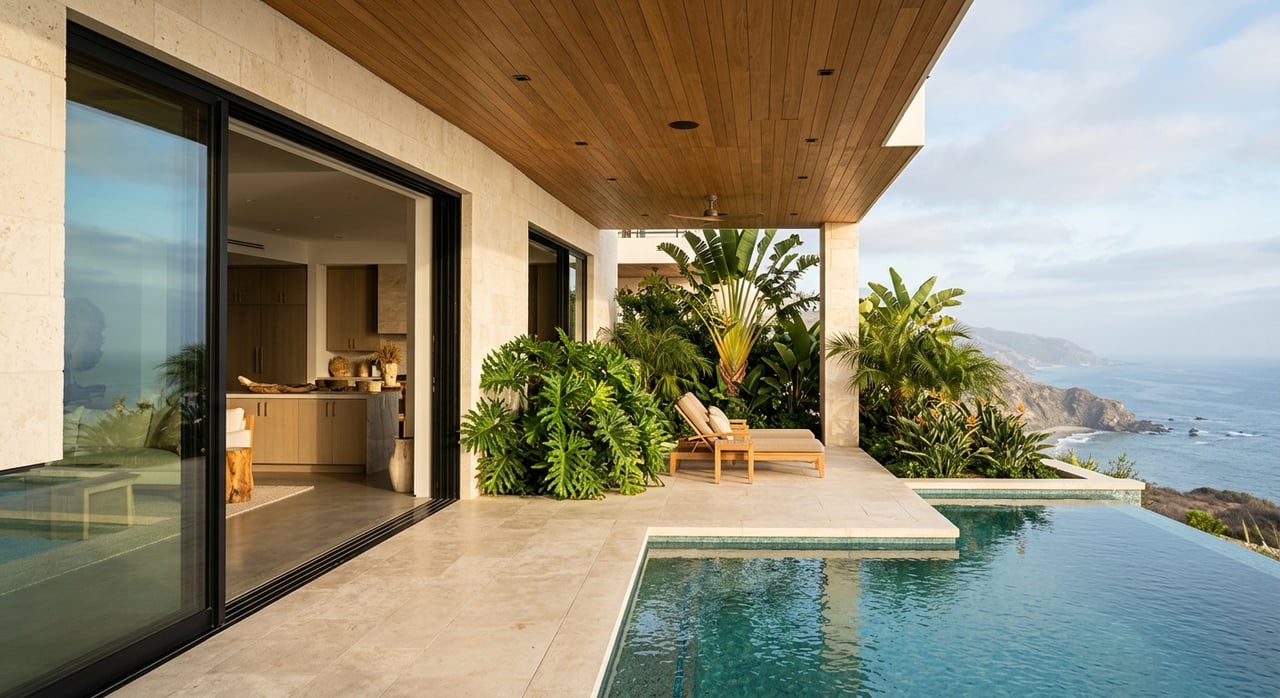
If you own an oceanfront home in Haleiwa, one pricing mistake can cost you weeks on market, serious negotiating leverage, or both. Coastal buyers do not evaluate these properties like typical single-family homes, and the local numbers show why. In this guide, you’ll see how strategic pricing works for Haleiwa oceanfront property, which factors matter most, and what to review before you list so you can enter the market with clarity and confidence. Let’s dive in.
Why Haleiwa Oceanfront Pricing Is Different
Haleiwa is not a market where a broad countywide median tells the full story. As of April 2026, Realtor.com’s Haleiwa market data showed a median listing price of $1.95 million, 134 average days on market, and 60 active homes for sale.
At the same time, the same source’s North Shore trend box showed a sold-price median of $1,265,000 and 79 days on market. By comparison, the Honolulu Board of REALTORS® market context summarized on Realtor.com noted Oʻahu single-family homes at a $1,199,500 median sales price, 21 median days on market, and 26% of sales closing above original asking price in March 2026.
That gap matters. If you price an oceanfront Haleiwa property based on a general Oʻahu average, you risk missing the unique value drivers of your specific site. In this part of the North Shore, pricing should be a micro-market exercise, not a simple price-per-square-foot formula.
Recent Sales Show Wide Value Gaps
Recent sales in and around Haleiwa make the case for property-specific pricing. They show that frontage, site position, and condition can influence value as much as, or more than, interior size.
For example, 61-365 Kamehameha Hwy in Haleiwa sold on January 14, 2026 for $3,350,000. It offered direct oceanfront or waterfront frontage with coastline, garden, mountain, and ocean views, but it measured 1,535 square feet.
Also on January 14, 2026, 68-309 Crozier Dr in Waialua sold for $3,450,000. That home was just 1,054 square feet, yet it had oceanfront or waterfront frontage, coastline and ocean views, and a condition description that included average, good, and updated/remodeled.
Compare that with 61-1016 Tutu Pl in Haleiwa, which sold on December 24, 2025 for $1,900,000. It was much larger at 2,418 square feet and had coastline, mountain, ocean, and sunset views, but it was a rim-lot property rather than a direct front-row oceanfront site.
Then there is 61-695 Kamehameha Hwy in Haleiwa, which sold on December 19, 2025 for $5,800,000. It was a 1,368-square-foot single-family home on a 0.48-acre lot in Kawailoa Beach Lots.
The takeaway is simple: not all water-oriented properties compete in the same pricing lane. A larger home with views may still price below a smaller direct-oceanfront property if frontage, lot position, and useability are stronger on the beachfront site.
What Buyers Pay For Most
Direct Frontage
Direct oceanfront or waterfront frontage is not the same as an ocean view. The recent sales suggest front-row homes can trade in the mid-$3 million range even at modest sizes, while a larger non-front-row property may sell for much less.
That does not mean every oceanfront premium is the same. What matters is the quality of the frontage, how the home sits on the site, and how buyers experience the water from the house and land.
View Quality
Views still matter, but they exist on a spectrum. Coastline, sunset, and open-ocean views can support value, yet broad views alone do not automatically place a property in the top pricing tier.
In Haleiwa, buyers often distinguish between direct beachfront living and a home that simply looks toward the water. That is why strategic pricing should reflect the exact view corridor, not just check the “ocean view” box.
Condition and Updates
Condition has real pricing power in a coastal market. Salt air, moisture, and exposure can make deferred maintenance feel larger to buyers, lenders, inspectors, and insurers.
The Crozier Drive sale is a good example because its condition was described as updated or remodeled, with an effective year built of 2024. When your home presents as move-in ready, buyers may be more comfortable with stronger pricing because they see fewer near-term unknowns.
Lot Utility and Privacy
Not every oceanfront lot functions the same way. Parking, shape, topography, road frontage, privacy, and usable outdoor area all affect how buyers value the property.
For example, the 61-365 Kamehameha Hwy sale details note private-road frontage and 10 parking spaces, while the Tutu Place property had sloping, terraced topography. Those differences influence daily use, future planning, and buyer perception of convenience.
Why Price Per Square Foot Falls Short
Price per square foot can be a helpful reference point, but it should not lead the pricing strategy for an oceanfront home in Haleiwa. Coastal buyers often pay for scarcity, frontage, risk profile, privacy, and land utility as much as they pay for interior space.
That is why two homes with very different square footage can trade surprisingly close together, or far apart. If you lean too heavily on size, you can either overprice a compromised site or underprice a rare front-row property.
Coastal Risk Factors Affect Value
Shoreline Setbacks
Coastal value is tied not only to beauty, but also to constraints. Hawaiʻi’s Coastal Zone Management Program identifies erosion, tsunamis, storm waves, stream flooding, subsidence, and sea level rise as major coastal hazards, and Honolulu’s shoreline setback framework uses erosion-rate-based setbacks ranging from 60 to 130 feet.
Lots without historic erosion data are generally subject to a 60-foot setback. In special flood hazard areas, new structures must be elevated at least 3 feet above base flood elevation.
For sellers, this matters because buyers often look past the view and ask practical questions about future flexibility. If a lot has meaningful setback limitations, that can affect how buyers underwrite value.
Flood and Sea Level Review
Flood maps and sea level guidance also shape buyer decisions. The State of Hawaiʻi Sea Level Rise Guidance Tool uses 0.5, 1.1, 2.0, and 3.2 feet of sea level rise scenarios, and it states that 3.2 feet is the planning scenario for most development.
The same source notes that FEMA’s Flood Map Service Center is the official source for flood hazard maps used by lenders when determining insurance requirements. In practical terms, buyers may factor in insurance costs, financing terms, and long-term property planning before they decide what they are willing to pay.
Erosion and Storm Exposure
The City and County of Honolulu has said that more than 70% of beaches in Hawaiʻi and 60% of beaches on Oʻahu are in chronic erosion, as cited in this City and County of Honolulu coastal article. Hawaii Ocean Safety also warns that tropical cyclones can generate storm surge and large waves that threaten coastlines.
That does not make oceanfront property undesirable. It simply means strategic pricing should account for the site’s full risk profile, not just its visual appeal.
A Smart Pricing Process for Sellers
If you want to price your Haleiwa oceanfront home strategically, start with a tighter lens than you would for a typical listing. The strongest approach is to combine micro-comparables with a property-specific document and risk review.
A practical seller checklist includes:
- Same-beach or same-corridor comparable sales
- Frontage type, including direct oceanfront versus ocean-view positioning
- View corridor and site orientation
- Condition, renovation history, and major system updates
- Shoreline setback exposure
- Flood zone status
- Permits, certifications, and shoreline-related documents
If available, shoreline-related records can be especially helpful. The State of Hawaiʻi shoreline certification resources can provide useful context when you are preparing documentation before going to market.
Should You Renovate Before Listing?
The answer depends on the scope of work and how the home currently competes. In a coastal market, clean presentation, visible maintenance, and thoughtful updates often matter more than taking on a major remodel right before listing.
This is where strategy matters. If your home’s condition is holding it back against stronger recent comps, targeted improvements and polished presentation may help support pricing and reduce objections. If the property is already rare because of its frontage and site, over-improving may not produce the same return.
Strategic Pricing Is Also Presentation
Pricing and presentation work together. Buyers form value opinions quickly, especially in a niche market where each active listing gets compared closely against a small pool of alternatives.
That is why pre-listing preparation matters. Strong staging, clear photography, and a well-organized property story can help buyers understand what makes your home different, from site position to updates to coastal documents already in hand.
For a special property like an oceanfront home in Haleiwa, that level of preparation can support a more confident launch and a stronger negotiating position. If you are thinking about selling, Tania Mahoni brings a concierge approach to pricing, presentation, and negotiation that is especially valuable for distinctive coastal homes.
FAQs
How should you price an oceanfront home in Haleiwa?
- You should price it using recent same-area comparables, frontage type, condition, lot utility, and coastal risk factors rather than relying only on countywide averages or price per square foot.
How much more is direct oceanfront worth than ocean-view in Haleiwa?
- Recent sales suggest direct oceanfront can command a major premium over ocean-view property, but the exact amount depends on site position, condition, and useability.
Do shoreline setback rules affect Haleiwa oceanfront home value?
- Yes. Shoreline setback rules can affect future building flexibility, buyer perception, and overall value, especially on lots with erosion or flood-related constraints.
Should you renovate a Haleiwa oceanfront home before selling?
- It depends on how your home compares with nearby listings and sales, but targeted repairs, maintenance, and presentation often matter more than a full remodel before listing.
What documents matter when selling an oceanfront home in Haleiwa?
- Helpful documents can include permits, update records, flood zone information, and shoreline-related materials such as certification documents when available.